


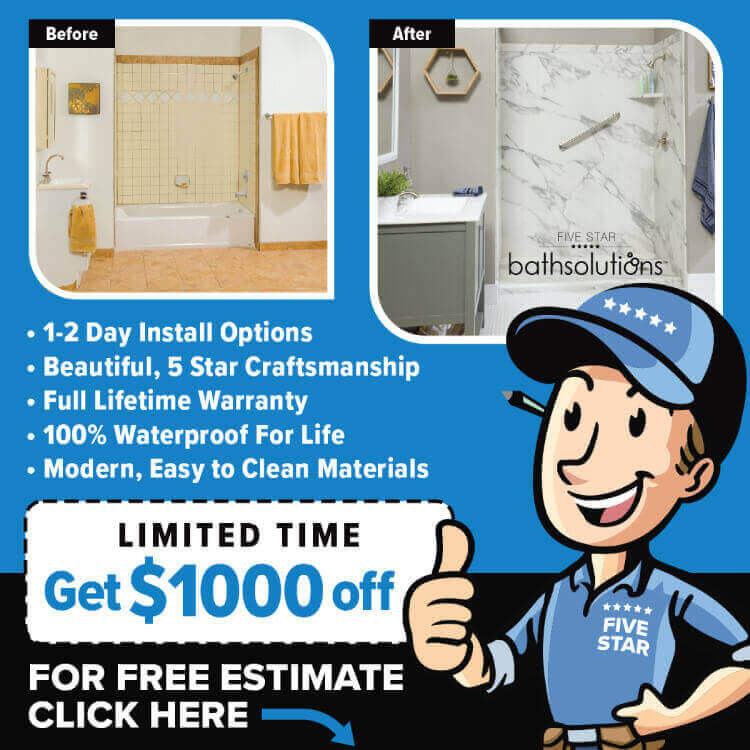
Don't let a small bathroom put you in a design dilemma. These small apartment bathrooms…
bathroom-remodel
Modern bathrooms reduce mold risks and improve daily living
April 23, 2026
Nearly half of U.S. homes have the right conditions for mold to grow, yet most homeowners assume their space is safe. That gap between perception and reality can quietly affect health, comfort, and daily living in ways people don’t immediately notice.
Bathrooms are one of the biggest trouble spots. Moisture builds up quickly, and mold hides behind walls or inside materials like grout and drywall. In older homes, especially, humidity and outdated construction create the perfect setup for spores to spread, leading to health concerns, structural damage, and expensive repairs over time.
Luckily, modern bathroom design changes the game. With non-porous materials, better ventilation, and smarter moisture control, today’s bathrooms are built to resist mold from the start.
Five Star Bath Solutions, providing bath remodeling across the country, explains how modern bathroom design can help reduce mold risks and improve daily living.
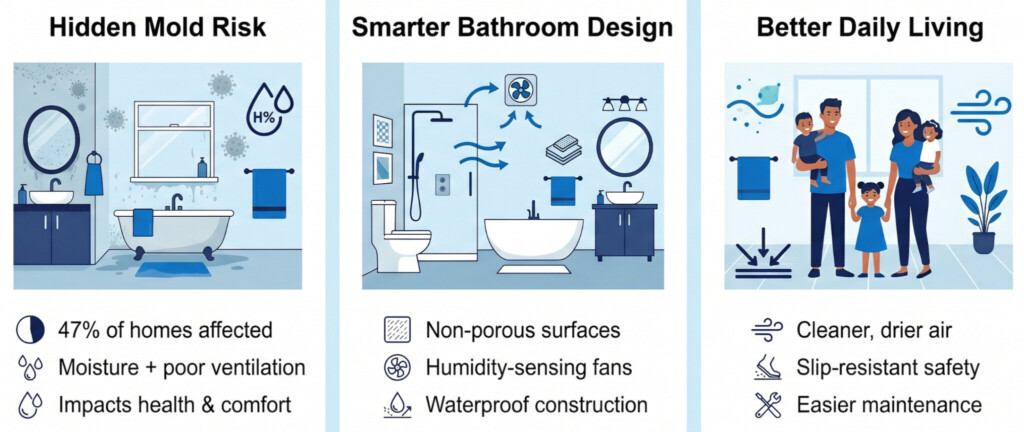
Modern Bathrooms: Design for Safer Living
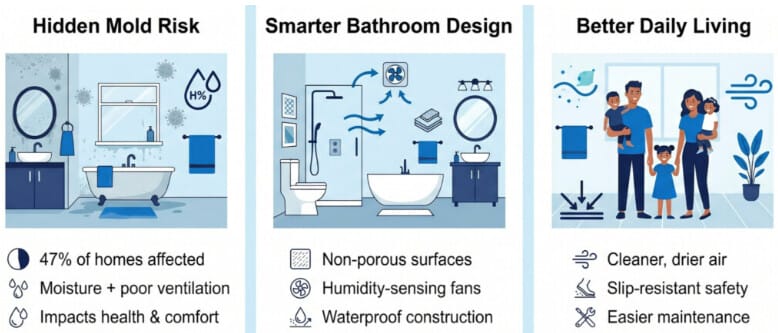
While often treated as an individual maintenance failure, indoor mold has evolved into a systemic infrastructure crisis. According to a November 2025 report by CBS News, an estimated 47% of residential buildings in the United States currently contain visible mold or dampness.
This isn't just a byproduct of "wet basements"; it is a reflection of a nation grappling with aging housing stock and increasingly volatile weather patterns. For the roughly 129 million Americans living in flood-prone coastal counties, this nearly 50% threshold represents a constant, silent threat to respiratory health.
Mold is a fungus, and its spores are so small that they enter your home naturally by floating through the air or by “getting a ride” on clothes, pets, or anything that you bring inside. But spores need food, humidity, oxygen, and warmth to grow, which is why human bathrooms are such a haven.
Even the best residential air filters won’t catch all the spores, so there’s no way to completely remove them from your environment. However, you can manage moisture levels in your bathroom and choose materials that don’t provide spores a hiding place.
High-Performance Materials
Let’s start with the materials. Modern materials keep water on the surface, where it belongs, so it can evaporate instead of soaking in. Older options, which are often porous and cellulose-based, tend to hold moisture, while today’s high-performance materials are built to fight mold from the start.”
The main features that matter when choosing materials for a bath remodel include:
- Large-format tiles (24×48 inches or larger) to reduce the number of grout lines
- Sintered stone and quartz, which are engineered to be virtually non-porous
- Epoxy grout, which is completely waterproof and chemically resistant to mold and mildew
- Antimicrobial additives (silver ion technology) to inhibit the growth of bacteria and fungi
Besides keeping mold at bay, high-performance materials also improve daily living conditions, especially for families with small children and seniors. Slick tiles in humid environments are not the safest surfaces for anyone, but they are especially problematic for young children and the elderly.
Modern porcelain and textured sintered stone are engineered to be slip-resistant in wet conditions without being abrasive. Also, high-strength, thin-profile structural boards allow for zero-entry showers, removing the 4- to 6-inch curb that’s a primary trip hazard.
Smart Ventilation and Humidity Control
Traditionally, fans are the main devices that help manage humidity in your bathroom. On warm days, you can also open the window (if you have one) and allow warm air to circulate and whisk the water away.
However, it’s easy to forget to turn on the fan after a shower. It happens more often than we like to admit, which is why most modern bathrooms use humidity-sensing fans.
These fans have built-in hygrometers that monitor the air and trigger the fan to start when relative humidity exceeds a set threshold (typically around 60%). The fan will continue running until the air is dry, regardless of whether the light switch is off.
Heated flooring and towel warmers are also popular options as they accelerate water evaporation and reduce the chance of mildew. However, they are a bit on the pricier side, which is why many homeowners see them as luxury additions.
Advanced Construction Techniques
Mold tends to grow in grout lines, cracked caulk, inside walls, and along ceiling corners; all hard-to-clean places that are even harder to keep dry. In traditional bathrooms, these hidden spots trap moisture, making them ideal for mold to spread.
Modern bathrooms tackle these problem areas at the source. Instead of water-resistant drywall, professionals now use fully waterproof, inorganic backer boards. Even if moisture gets behind the tile, there’s nothing there for mold to feed on.
Smarter design also improves how water moves through the space. Sloped floors guide water toward high-capacity linear drains, so it flows out quickly instead of pooling in corners. Curbless showers remove the edges where water, soap scum, and debris tend to collect, making the space easier to clean and better for daily living.
Impact on Daily Living
Modern bathrooms aren’t just about looks; they make everyday life easier and safer. With high-performance surfaces and smarter design, cleaning takes less effort, moisture is kept under control, and the air feels fresher instead of damp and heavy.
You also get a safer space to move around in. Even floors and slip-resistant surfaces help reduce the risk of falls, especially for kids and older adults. And when everything works the way it should (no lingering water, no musty smells), the whole room feels calmer, more comfortable, and simply better to use every day.
Author:
Dean Hartley
Brand President
Five Star Bath Solutions
Categories (tags):
Find Your Local Five Star Bath Solutions Team
FSBS teams serve communities nationwide with premium bath and shower remodeling solutions. Enter your city or ZIP code to connect with the team nearest you.
View All Locations

